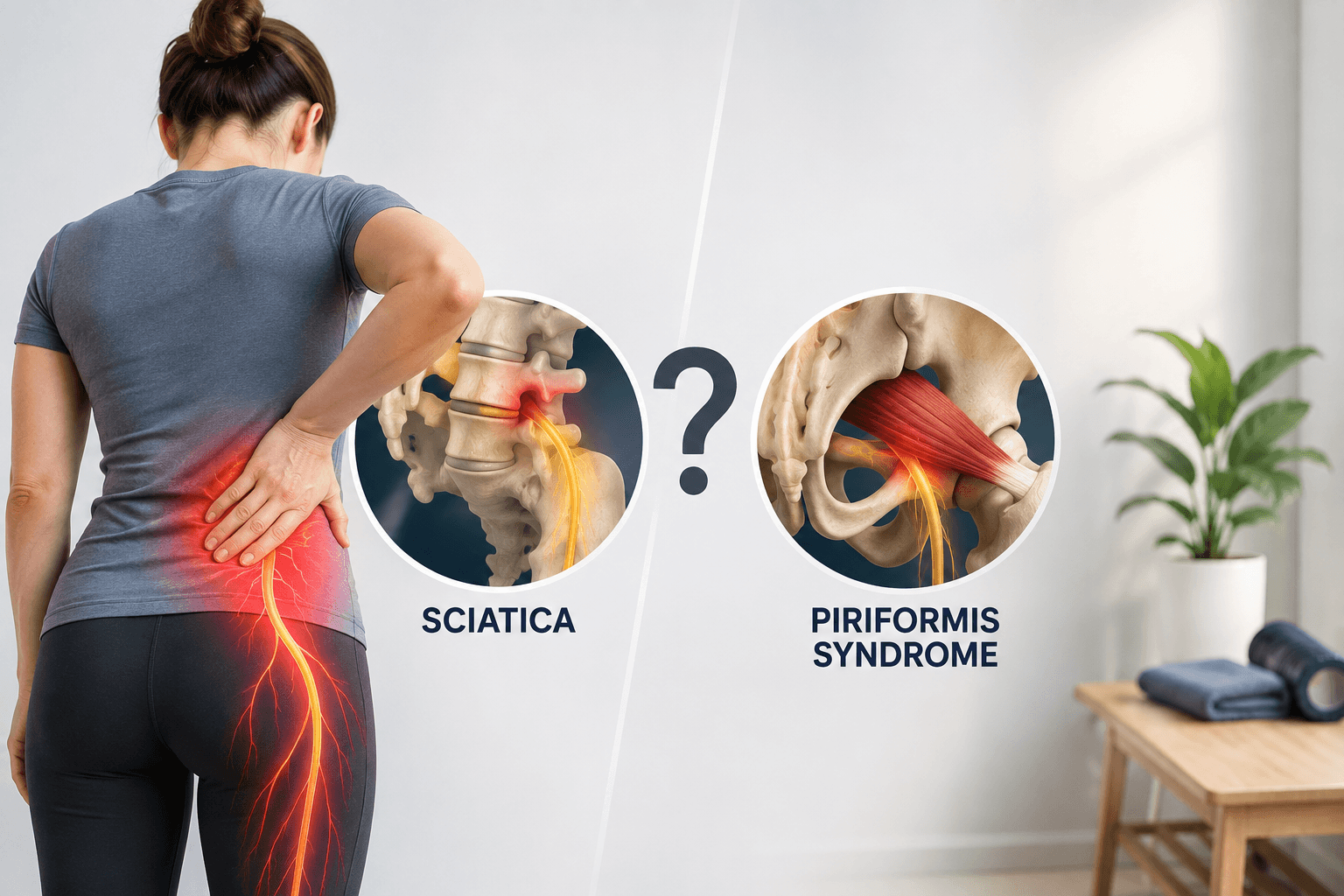

Stop Guessing Your Leg Pain: Find the Real Cause
Leg pain that will not quit can wear you down fast. Walking around Fernley events, doing yard work, or trying to enjoy time at the lake suddenly feels harder when every step sends a streak of pain down your leg. Many people are told it is just age or are given a quick label like sciatica without a real explanation.
Sciatica and piriformis syndrome can feel almost the same, but they are not the same problem. They affect the sciatic nerve in different ways and often need different treatment plans. When you understand the difference, it is easier to get the right help and protect your back, hips, and legs over time.
By the end of this article, you will know the key signs of each condition, common triggers, and how a detailed exam can uncover what is really going on. Leg pain is not something you just have to live with. With the right care, many people get back to work, family time, and the Fernley activities they enjoy with more confidence and less pain.
Sciatica 101: What It Is and How It Feels
Sciatica is not a diagnosis by itself. It is a word that means the sciatic nerve is irritated or pinched. This large nerve starts in the lower back, runs through the buttock, and travels down the back of the leg. When something presses on it at the spine, it can send pain down the whole path.
Common symptoms of sciatica include:
• Sharp, burning, or electric pain down the back of one leg
• Numbness or tingling in the leg or foot
• Weakness when you try to lift your foot or stand on your toes
• Pain that gets worse when you sit, bend forward, or cough
In many people, sciatica comes from issues in the lower back, such as a disc bulge or herniation, spinal wear and tear, narrowing of the spinal canal, pregnancy changes, or an old injury that never healed well.
Everyday tasks can stir it up. Summer and fall often bring more lifting, yard projects, long drives, and back-to-school routines. All that bending, twisting, and sitting can stress the lower back. If a disc pushes on the nerve or a joint is not moving well, the sciatic nerve may become angry and start to send strong pain signals.
When someone comes in with these symptoms, sciatica treatment in Fernley usually begins with a careful exam. That may include:
• Health history and questions about when the pain started
• Movement and posture checks
• Neurological tests for strength, reflexes, and sensation
• Imaging, such as an X-ray or an MRI, when needed to see the spine more clearly
Finding where the nerve is being pressed is the first step toward calming it down.
Piriformis Syndrome: The Sciatica Look-Alike
Piriformis syndrome also affects the sciatic nerve, but the trouble spot is not the spine. The piriformis is a small muscle deep in the buttock that helps rotate your hip. If it gets tight, inflamed, or overworked, it can squeeze the sciatic nerve as it passes underneath or through the muscle.
Hallmark signs of piriformis syndrome often include:
• Deep aching pain in the buttock on one side
• Pain that can shoot down the back of the leg, similar to sciatica
• Pain that gets worse when sitting on a hard surface
• Discomfort when climbing stairs or getting out of a car
Long drives between Fernley and nearby cities, desk jobs with a lot of sitting, biking, and weekend sports can all irritate the piriformis muscle. When the hip does not move well or the core is weak, this small muscle may try to do extra work and tighten up.
There are some key differences from classic sciatica:
• The low back may feel mostly normal, or only mildly sore
• Pain is often centered in the buttock instead of starting at the spine
• Stretching or rotating the hip often reproduces the pain
• Pushing directly over the piriformis area can feel very tender
Many people call any pain down the leg “sciatica,” but if the real problem is in the hip muscles, focusing only on the spine may not bring full relief. The approach has to target the hip, glutes, and movement patterns that keep stressing the piriformis.
Sciatica vs. Piriformis: How to Tell Them Apart
Both conditions can cause leg pain, tingling, or numbness, so how can you tell what is what? There are a few helpful clues.
Where the pain begins:
• Sciatica often starts in the low back and then travels into the buttock and leg
• Piriformis syndrome usually starts with a deep ache in the buttock and may or may not include low back pain
What makes it worse:
• Sciatica tends to flare with bending forward, lifting, coughing, or sitting for long periods
Request Appointment
Questions about this topic? Our Fernley team is happy to help.
Written by
Ascension Health
Chiropractic & Wellness Team
Fernley’s trusted team for chiropractic care, joint injections, hormone therapy and medical weight loss, helping Northern Nevada live pain-free.